
Gorgon City
The year after my first film, I art directed someone else’s: a spec music video with a dreamer, a gorgon, fourteen mythical characters, and two days of flour in the air.
-
The brief: an unofficial spec music video for Gorgon City’s “Imagination,” directed by Lucy Leigh-Pemberton. Like Juicy, nobody hired us and the band wasn’t involved. A dreamer falls asleep at a piano and wakes up inside Gorgon City, a mythical world of fairies, statues and dragon girls, where he meets the Gorgon Girl and loses her when he wakes up for real. Lucy wrote eight characters. I said the dream needed more and added six, then designed, sourced and styled all fourteen, art directed two days at the Palace of Fine Arts and a dance studio in San Francisco, and shot the stills.
-
Art director, costume designer and stills photographer. Directed by Lucy Leigh-Pemberton. Harvey Newton Haydon flew in from England to play The Imaginer. Hair by Nick Finley. Plus makeup, set design, dancers and a film crew across two locations. 2014.
-
Eight characters became fourteen, each with its own board for costume, hair, makeup and props. The Palace of Fine Arts gave the mythology its architecture; white flour in a dance studio gave the dancers weightlessness. It was my first time serving another director’s vision, and it taught me the difference between owning a world and building one for someone else.
Watch Imagination Spec Music Video
The Challenge
The vision was monochrome, and monochrome is slow.
The vision was monochrome: a dream world full of living statues, white from head to toe. To get there, we painted the cast white, and it was much harder than it looked on the mood board. Every look took a long time in the makeup chair. Once the paint was on, it didn’t stay perfect, so it needed touch-ups all day to keep looking like stone on camera. With fourteen characters and only two days to shoot, the paint set the pace for everything.
The Story
SAN FRANCISCO, SPRING 2014
After film school I made Juicy Couture, and that’s how Lucy Leigh-Pemberton knew me. She came to me with an idea for a spec music video and one character already in her head: a girl covered in dragon spikes. I loved it right away. She asked me to be her art director, and I said yes. My job was to take that one girl and build the rest of the dream around her.
The Brand Pillars
Branding
Gorgon City already had a look: white and sculptural, with a stone gorgon on the cover of their album Sirens. Lucy knew the band, so we didn’t invent a new look, we matched theirs. Keep the white, and bring the statue to life. As Kye from the band put it: “We like the idea that people coming to our shows can go somewhere with us.”
Characters
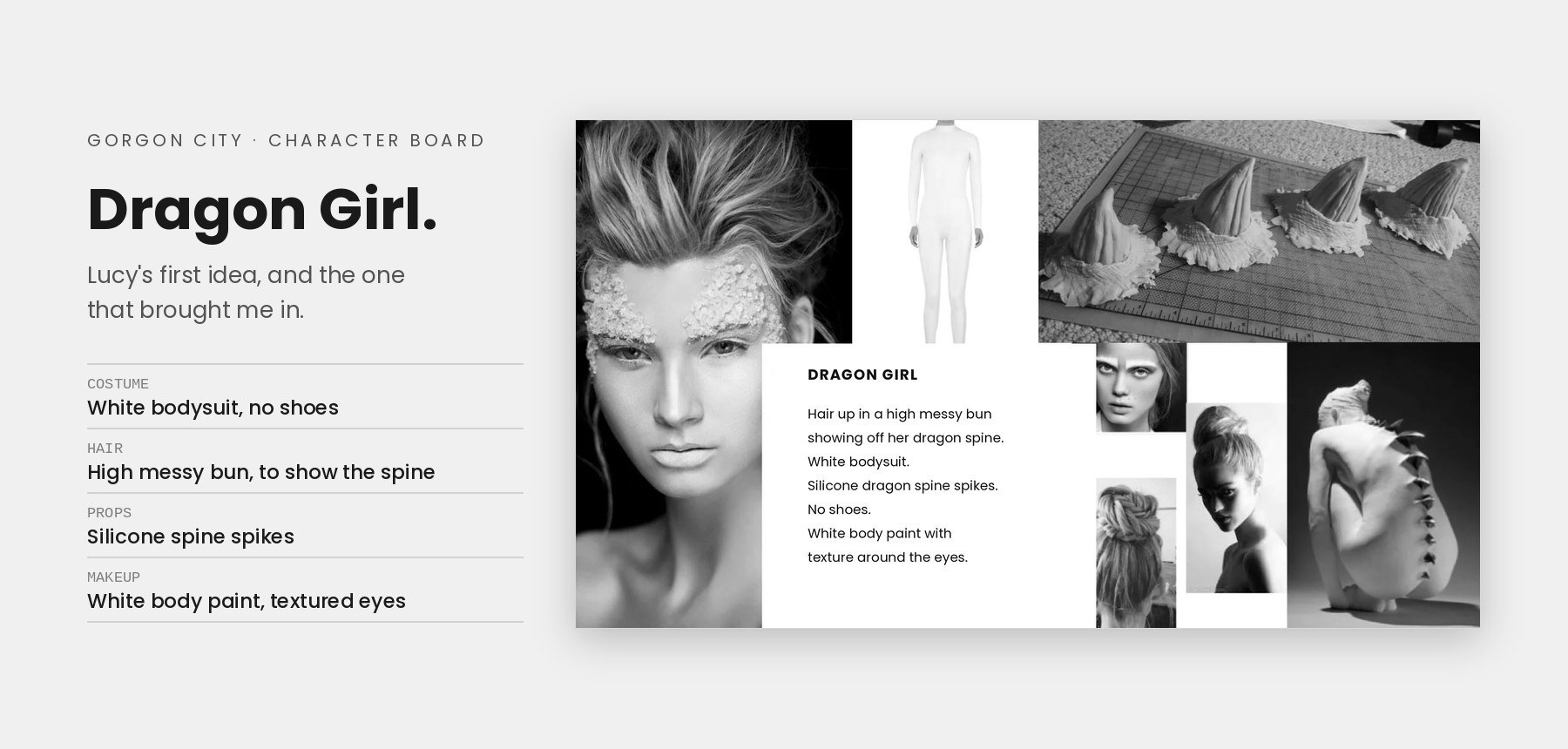
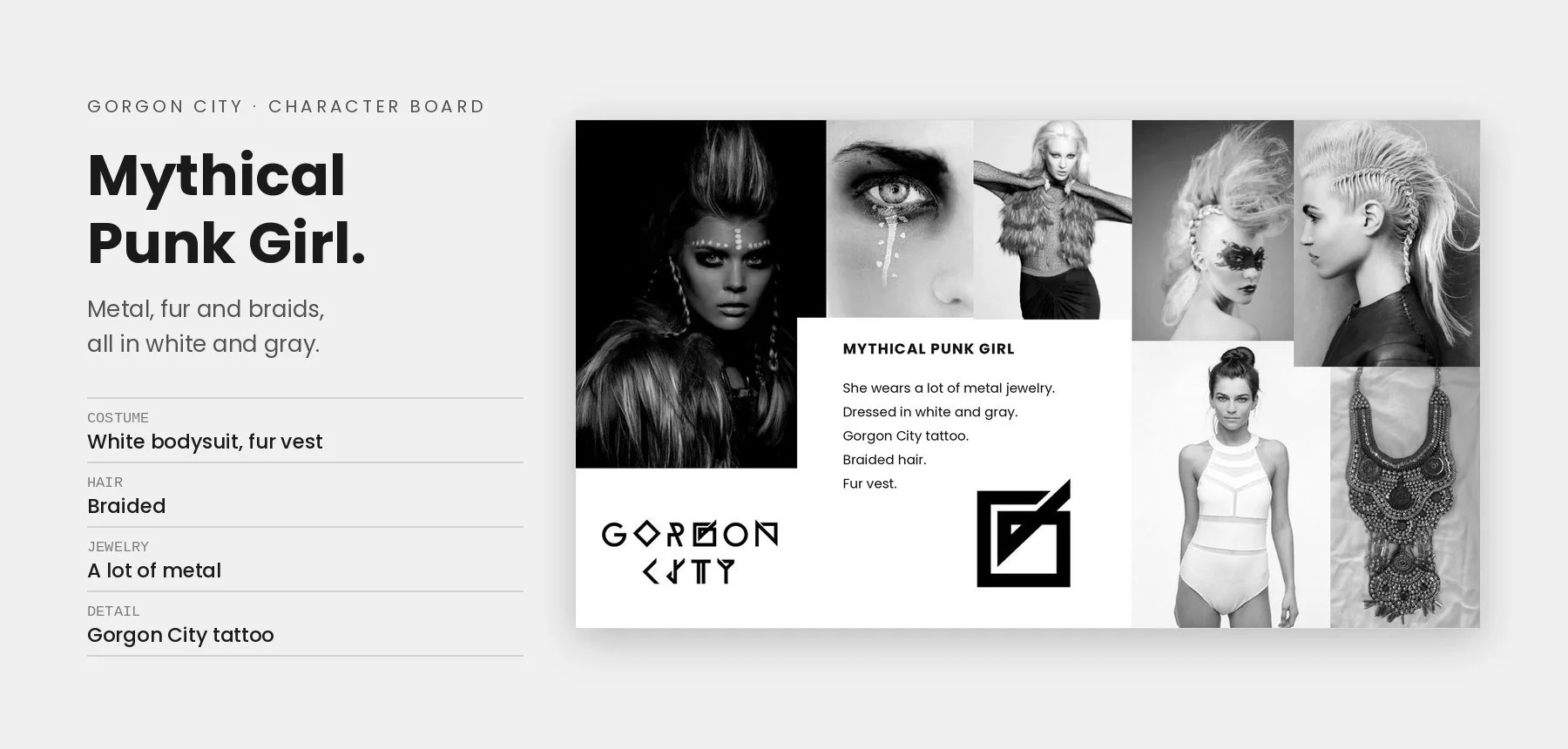
Lucy wrote eight characters and I added six. Each one got its own board for costume, hair, makeup and props. The Mythical Punk Girl wore metal jewelry, braids, a fur vest and a Gorgon City tattoo. The Dragon Girl had her spikes. White paint tied them all together, and the small details told them apart.
World
A Midsummer Night’s Dream meets Greek mythology: a dream where statues come alive. Mostly white, with touches of gold. We shot at the Palace of Fine Arts for real classical columns, and threw white flour in a dance studio so the dancers looked weightless. The goal was a world that stays with you after you wake up.
Part 1 — Building characters
It started with Lucy’s story. A dreamer, The Imaginer, falls asleep at a piano and wakes up in Gorgon City, a mythical world full of strange and beautiful creatures. He meets the Gorgon Girl, the love of his life, and then he wakes up for real.
Lucy had eight characters. When I read it, I felt the dream needed more people in it, so I added six. Then every character got its own board: the costume and where to source it, hair and makeup, and the props and set pieces around them. The Mythical Punk Girl, for example, wore metal jewelry in white and grey, braided hair, a fur vest and a Gorgon City tattoo.
The rules came from the band’s look and from Greek statues: white paint on skin, sculptural shapes, and touches of gold, like the old Greek gods. Every character had to look like they belonged to the same dream, and still be someone you’d remember. Fourteen characters, one dream.
Overview
Tradeoff
Every character I added made the dream fuller and the schedule tighter. Fourteen characters meant fourteen paint jobs on a two-day shoot, and that’s a big part of why the paint became the hardest part of the production.
Once Lucy’s story was set, the design job began. Every character got a board for costume, hair, makeup and props: The Imaginer, the Gorgon Girl, the Mythical Punk Girl, the Dragon Girl, the Statue Girl, the Clown Girl, the Fawn Girl and the Welcomers. Everything stayed inside the band’s look: white paint on skin, white and gray costumes, metal, fur and silicone spikes. Then the set. We shot at the Palace of Fine Arts for its real classical columns, and in a contemporary and ballet dance studio in San Francisco, where we filled the air with white flour so the dancers looked weightless.
Brand, fashion and set design
This is the cover of Sirens, Gorgon City’s 2014 album, and it’s where our song came from: “Imagination” is track 9. It shows a gorgon carved in white stone, with snakes for hair, blank eyes and nothing else on the page. Lucy knew the band, so instead of inventing a new look, we started here.
Everything on set came back to this statue: white paint on skin, white hair, white and gray costumes, almost no color. Our job was to take a gorgon who never moves and build a whole dream where she could. She’s the reason everyone on set was painted white.
The Gorgon
Part 2 — The shoot
Overview
Then the shoot: two days at two locations. On set I handled the styling, the set design and the stills. That meant dressing the cast, designing the sculptural pieces around them, and shooting photos to go with the video. Harvey Newton Haydon, a British model, flew in from England just for the weekend to play The Imaginer.
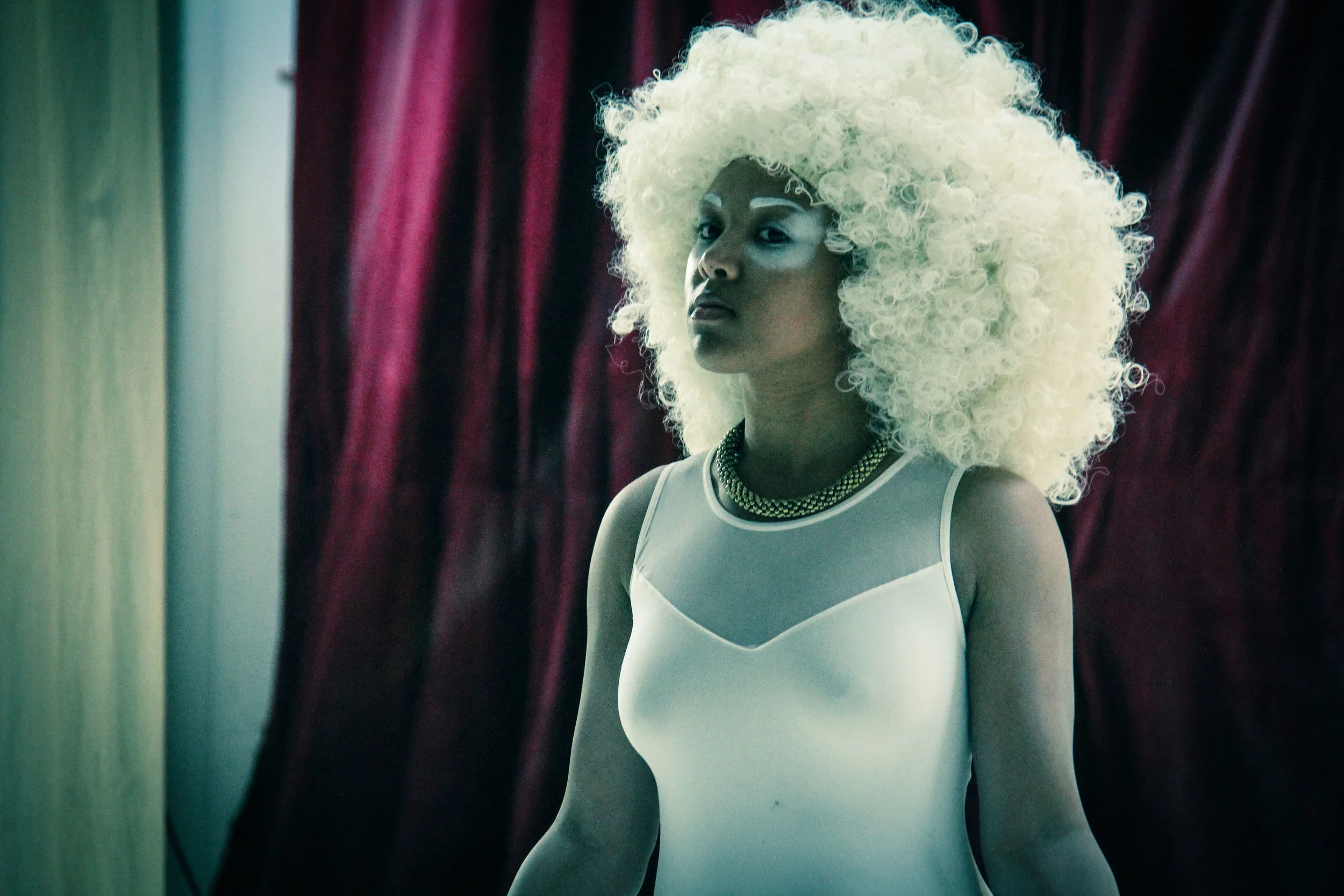
The first location was the Palace of Fine Arts, for its real classical columns. The second was the theater at a contemporary and ballet dance studio in San Francisco, and that one was my favorite. It had red curtains, a dark stage and white flour in the air, so the dancers looked weightless. That’s where the dream finally looked like a dream.
Tradeoff
The Palace of Fine Arts gave us the columns, but it was outside in bright sun, and the sun was hard on the white face paint. With so many characters, I was running between setups trying to keep every look camera-ready. The theater was the opposite: indoors, the light was ours, and the paint finally looked like stone. Next time, the white paint stays indoors.
A finished spec music video, and one of the strongest pieces on my reel. It was the first time I built a whole world around someone else’s vision, and it showed me I could. The part I didn’t plan for was the people. Lucy, the cast, the stylists and the dancers became connections that stayed with me long after the shoot, and my creative network in San Francisco got a lot bigger. A good world stays with you after the dream ends.
The Result
What this project led to
Two things. The first: on this set I figured out which part of the work I loved most. It wasn’t running everything, like on Juicy. It was art direction: taking someone’s idea and building the world it lives in. After Gorgon City, I knew I wanted to be an art director.
The second: I started moving toward design. Fourteen characters, a set and a look that all had to work together was already design, just with paint and flour instead of screens. That’s when my transition into design began, and five years later I was a designer at Google.